Life
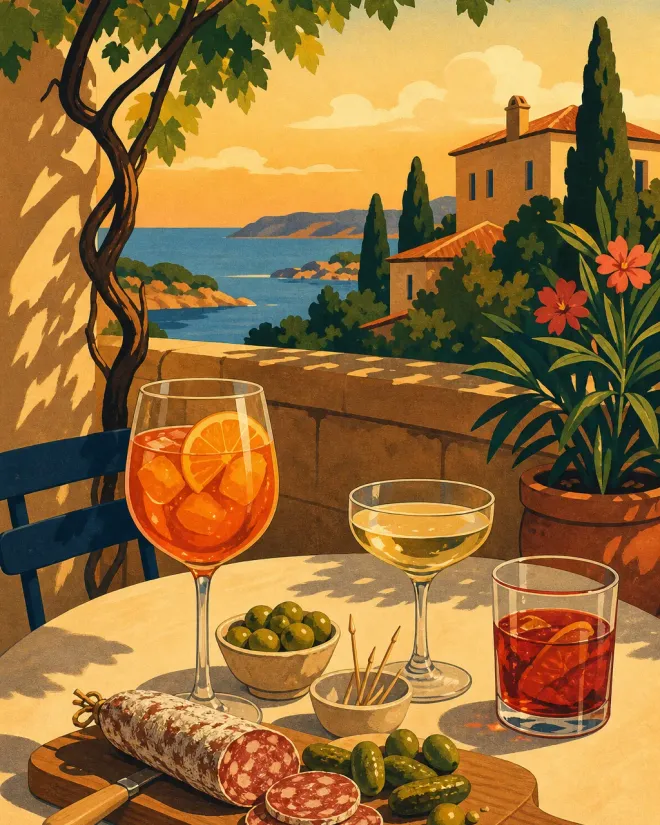
The Sacred 7 P.M.: How the Apéro Runs France
Not a drinking habit but a social protocol: olives, one glass, two hours of talk — how the apéro turns 7 p.m. into the day's real appointment.
Art de vivre & savoir-vivre
Nobody hands you the manual when you arrive in France, so I started writing one. Dinner table rules, the la bise choreography, tu vs vous, the sacred apéro — everything our grandmothers assumed you knew by birth. I welcome the cliché first, then tell you what is actually underneath it.
Not a drinking habit but a social protocol: olives, one glass, two hours of talk — how the apéro turns 7 p.m. into the day's real appointment.
Under-26s walk in free, national museums open their doors on first Sundays, and the Louvre lingers past dark: art on the public-housing budget, not the yacht one.
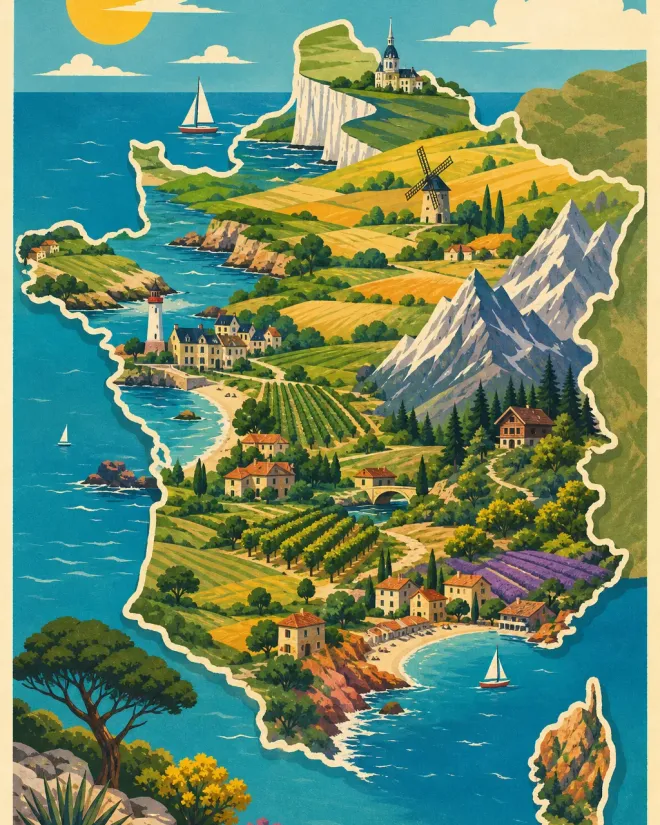
Beach morning, glacier afternoon, and eleven time zones when the far-flung islands check in: France is a small country wearing a continent's wardrobe.
Paris to Lyon in two hours, a world record at 574 km/h, and stations built like cathedrals: the everyday 300 km/h habit that quietly deleted France's distances.
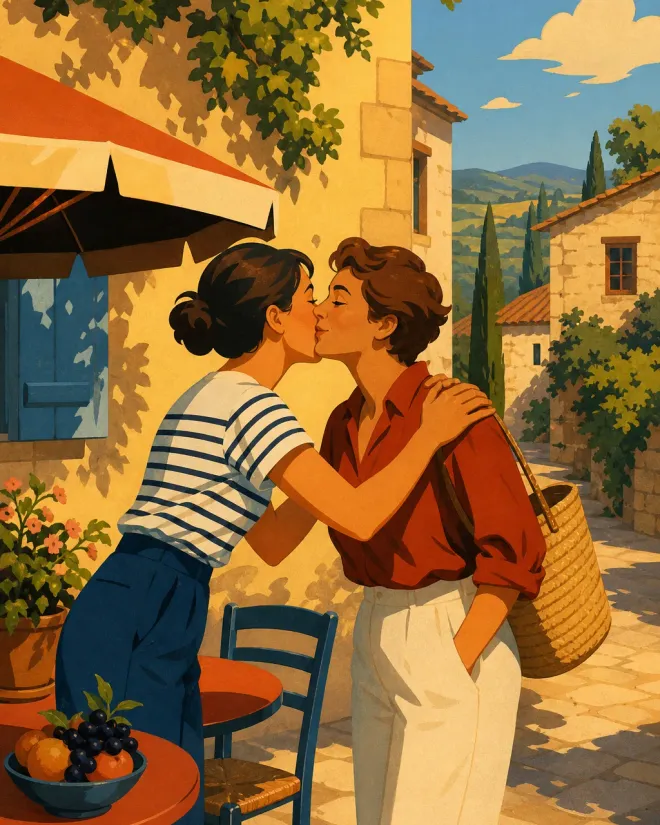
The air-kiss choreography that terrifies every visitor: how many kisses, which cheek first, whether men do it, and why it is not what you think.
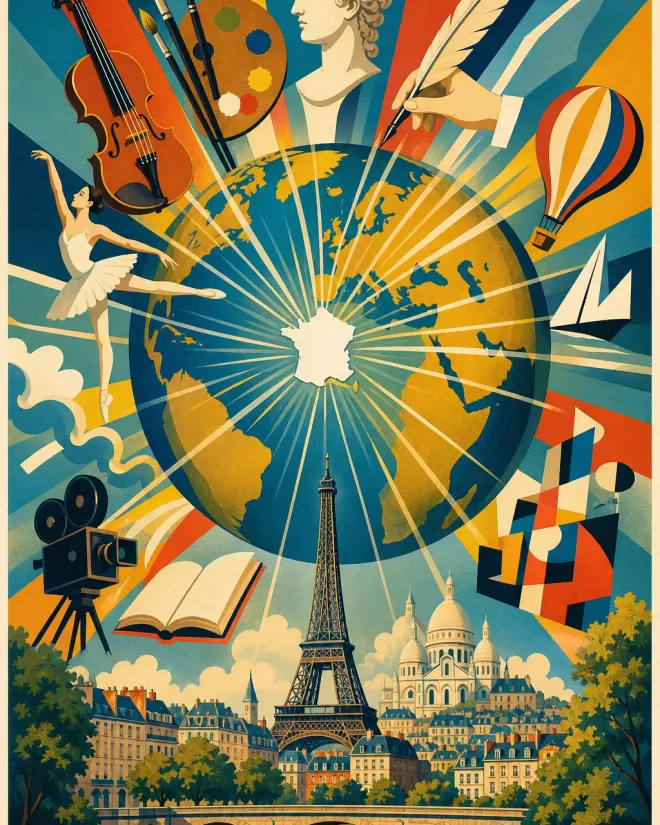
Grand Louvre shows, film festivals on every continent, and an Institut français in a hundred countries: how France turned culture into foreign policy.
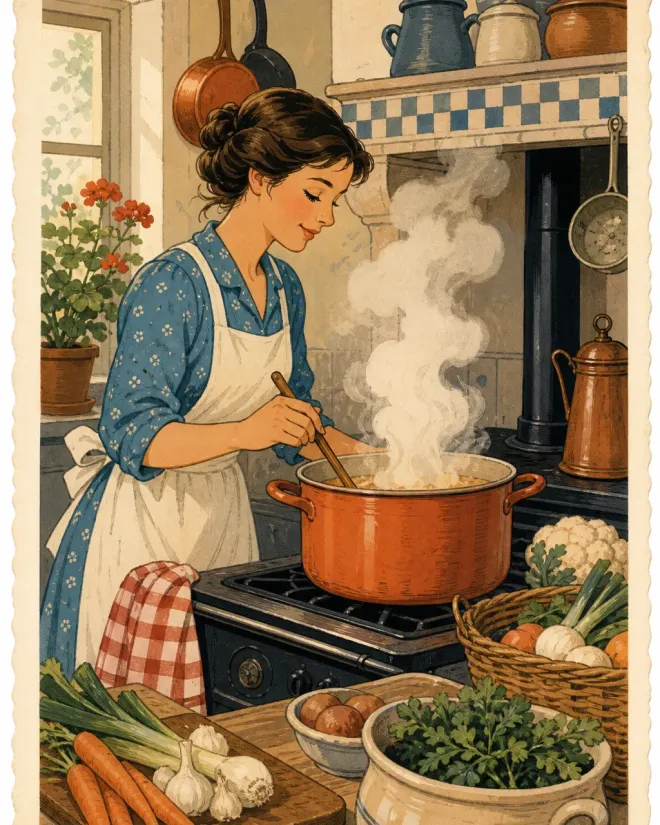
The French don't brag about cooking. They assume it. Inside fait maison — the pride, the 2014 restaurant law, and why a simmering pot beats a showpiece.